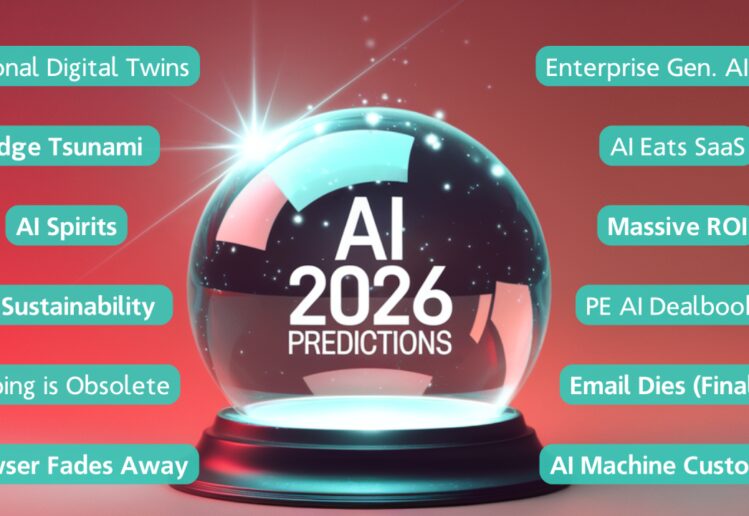
AI predictions 2026 are setting the stage for an unprecedented transformation in technology and business. As we enter the so-called “Agentic Era,” the influence of artificial intelligence will extend beyond mere data consumption to active contributions that reshape the web and industries alike. Major trends to watch include the anticipated updates to ChatGPT, which promise to refine AI visibility tools by combating spam and enhancing content quality. Furthermore, as standalone AI tracking startups face drastic challenges in 2026, the landscape of marketing AI will evolve, emphasizing the need for sustainable strategies that prioritize user engagement. With acquisitions in AI on the rise, staying informed about these developments is crucial for those navigating the future of technology.
Looking ahead to 2026, we are poised to witness significant advancements in intelligent systems that will redefine how we interact with digital information. As businesses and consumers alike harness the potential of machine learning and automation, new technology trends will emerge that promise to enhance user experience and streamline operations. Key innovations, including updates in conversational AI and tools designed to enhance online visibility, are expected to play pivotal roles in this evolution. Additionally, with looming changes in the marketplace and shifts in investment strategies, the trajectory of AI-driven solutions will likely take unexpected turns. Observing these developments will provide valuable insights into the intricate dynamics of the tech ecosystem.
Understanding the Agentic Era: A New Dawn for AI
As we step into 2026, we are greeted by the onset of the so-called ‘Agentic Era’—a transformative phase wherein artificial intelligence (AI) evolves beyond mere consumption of information to actively contributing to it. This evolution is driven by advancements in AI technology trends, particularly in the realm of data processing and machine learning capabilities. In this new era, AI systems are expected to integrate socio-cultural contexts into their operational frameworks, allowing them to offer more nuanced insights and solutions. Therefore, the implications for businesses are profound, as leveraging AI for consumer interactions becomes essential for maintaining a competitive edge.
Moreover, this shift signals a significant change in how organizations will utilize AI systems. Gone will be the days of passive automation; companies will now focus on AI that can proactively generate content, engage audiences, and drive genuine interactions. The predictions tap into the broader narrative concerning future trends in technology for 2026—highlighting how we can expect AI tools to evolve into central components of digital marketing strategies, fundamentally shifting the landscape of consumer engagement and marketing.
AI Visibility Tools and Their Uncertain Future
In 2026, the future of AI visibility tools appears precarious as we witness an impending ‘Extinction Event’ for numerous standalone startups operating in this niche. Stretched funding runways from previous years are predicted to run out, leading many small firms to either collapse or seek acquisition opportunities. This shift will tighten the market and compel remaining companies to innovate or risk becoming obsolete. The decline and consolidation of these AI visibility tools underscore the critical need for robust solutions that can withstand the evolving demands of digital marketing and SEO strategies.
Furthermore, as AI visibility advances, marketers must be prepared to adapt their strategies to leverage these emerging technologies effectively. The 2026 landscape will likely emphasize the integration of AI visibility tools with comprehensive analytics, offering businesses deep insights into audience behavior and trends. Consequently, companies that remain vigilant and agile in adopting innovations in AI visibility will not only survive but thrive as they harness these capabilities to optimize campaign performance and enhance their overall market presence.
ChatGPT Updates 2026: Redefining Engagement
The launch of significant quality updates for ChatGPT in 2026 is set to revolutionize how businesses handle AI-generated content. As spammy behaviors and manipulative practices become more difficult to execute, the landscape for content creation will significantly shift. Enhanced validation protocols and integration technologies will ensure that AI systems become more discerning. Companies will need to rethink their content strategies, embracing more authentic and engaging methods that resonate with consumers while effectively fighting spam.
Moreover, as ChatGPT matures, its implications for digital marketing are profound. With a focus on generating high-quality, contextually relevant content, brands will benefit from increased user engagement and retention. The anticipated updates will help create a more balanced digital ecosystem where valuable content rises to the top, and engaging consumers becomes the pinnacle of content marketing strategies in 2026.
The Rise of AIOs: Dominating Keyword Space
The continued decline in click-through rates throughout 2026 is creating a landscape where AI Overviews (AIOs) capture an astonishing 75% of keywords for significant sites. This shift represents a stark change in the optimization strategies that digital publishers have relied on for years. As AIOs become dominant players in keyword space, relying on traditional advertisement-based models will no longer suffice. Publishers are now urged to access their audiences directly, fostering deeper connections, and ensuring sustainable monetization.
The implications of AIO dominance are far-reaching. Content creators must prioritize engagement over sheer numbers, crafting narratives and experiences that resonate with audiences. As businesses begin to develop stronger community ties and personalize their offerings, advertisers will likely need to recalibrate their strategies to compete in an ecosystem increasingly driven by direct interactions rather than impressions and clicks alone.
Marketing AI: Navigating New Challenges in 2026
As we venture further into 2026, marketing AI tools are pushing user-generated content (UGC) platforms to evolve rapidly. The growing prevalence of identity spoofing poses a significant threat to content authenticity, prompting businesses to implement new verification strategies and categorization methods. By distinguishing genuine creators from impersonators, brands will not only protect their reputations but also enhance user trust, vital for successful engagements in a crowded marketplace.
Consequently, this imperative for authenticity will drive technology firms to innovate solutions that integrate seamlessly with AI capabilities. By harnessing these advancements, companies can effectively ensure that UGC is credible and relevant, thus nurturing a more engaged and loyal audience. Ultimately, as marketing AI pushes platforms to adapt, businesses that embrace these changes will be better positioned to navigate the complexities of audience dynamics in 2026.
ChatGPT’s Advertising Model: A Game-Changer for Brands
The anticipated launch of ChatGPT’s advertising platform with a two-tier structure—featuring a free ad-supported tier and a credit-based pro tier—is set to dramatically change how brands approach advertising. This model offers an unprecedented opportunity for businesses to gain insightful data into consumer behavior, enabling them to tailor their marketing strategies to more effectively meet market demands. This shift aligns perfectly with the emerging trends of AI in marketing, where targeted insights will drive campaign success.
Moreover, the accessibility of demand data will allow even smaller brands to compete effectively. By leveraging AI-generated insights, companies can enhance their product recommendations and bolster their engagement tactics. This democratization of advertising data will level the playing field, encouraging innovation among new market entrants while forcing established players to reconsider their strategies in a landscape where consumer preferences are always in flux.
The Impact of Acquisitions in AI: 2026 Trends
As we forecast the trends in 2026, the potential acquisition of innovative AI companies emerges as a prevalent theme. For instance, Perplexity’s growth stagnation may lead to its acquisition by a tech giant like xAI or Salesforce, marking a significant moment in the AI landscape. These acquisitions reflect a crucial response to the increasing demand for real-time retrieval-augmented generation (RAG) technology, positioning organizations to stay ahead in a competitive market fueled by rapid technological advancement.
This trend of consolidation highlights how companies across sectors are keen to build comprehensive AI capabilities by acquiring startups that offer critical technologies. Consequently, as larger entities absorb smaller firms, the industry will witness a heightened focus on integrating these technologies into broader offerings, thus enhancing customer experiences and operational efficiency. As businesses move forward, the importance of strategic acquisitions in shaping the future of AI technology cannot be underestimated.
Competition and Nvidia: What Lies Ahead in 2026
The year 2026 is poised to see substantial shifts in the competitive landscape of the AI hardware market, particularly concerning Nvidia. With major tech companies exploring the transition to custom silicon, Nvidia’s previously unchallenged dominance may face a dramatic plunge, with stock forecasts suggesting a possible -20% drop. This transition arises from the increasing desire for tailored solutions, where companies seek to optimize performance beyond what Nvidia’s offerings can provide.
As competition intensifies, Nvidia will be compelled to innovate and adapt, focusing on enhancing their product lines or forging potential partnerships to maintain their market share. The outcome of these strategic maneuvers will not only impact Nvidia’s position but also set the tone for the broader AI hardware ecosystem. As 2026 unfolds, all eyes will be on how well Nvidia navigates these shifts and the ripple effects on other players in the technology sector.
Frequently Asked Questions
What are the major **AI predictions for 2026** that businesses should be aware of?
In 2026, businesses should prepare for significant shifts such as the potential collapse of standalone AI visibility tools, the launch of ChatGPT’s quality update, and a transformative approach towards user-generated content (UGC) platforms. These changes indicate an ‘Agentic Era’ where AI contributes more actively to the web.
How will **2026 technology trends** affect standalone AI visibility tools?
The **2026 technology trends** predict an ‘Extinction Event’ for many standalone AI visibility tracking startups, especially in Q3. As funding cycles conclude, many of these companies may either collapse or be sold, compelling businesses to adapt to these rapid changes in the AI landscape.
What is the significance of **ChatGPT updates in 2026** for marketers?
The **ChatGPT updates in 2026** will enhance the platform’s defenses against spam and mass-generated content, making it crucial for marketers to develop genuine, high-quality content. It also means that marketers will need to adapt their strategies in line with new AI visibility tools.
How will **marketing AI’s future** influence content monetization strategies in 2026?
As **marketing AI** evolves in 2026, publishers will likely need to shift their monetization strategies away from traditional ads. Due to the predicted dominance of AI Overviews (AIOs), direct audience monetization will become essential as reliance on external advertisements decreases.
What role will acquisitions in AI play in shaping the industry in 2026?
In 2026, acquisitions in AI, such as the anticipated sale of Perplexity to xAI or Salesforce, will play a critical role in shaping the competitive landscape. These strategic moves may enhance capabilities in real-time Retrieval-Augmented Generation (RAG) technology.
What challenges will **AI visibility tools** face in 2026?
In 2026, standalone **AI visibility tools** are expected to face significant challenges due to funding shortages, leading to an ‘Extinction Event.’ Companies will need to innovate rapidly or risk being absorbed or eliminated from the market.
What is the expected impact of ChatGPT’s advertising platform on brands in 2026?
ChatGPT’s new advertising platform in 2026 is expected to introduce an ad-supported free tier and a credit-based pro tier. This will allow brands enhanced access to consumer demands and insights, significantly influencing their marketing strategies.
Can businesses anticipate a shift in how user-generated content is handled in 2026?
Yes, by 2026, the rise of **marketing AI** will force UGC platforms to segregate feeds to combat challenges like identity spoofing. This change will be critical for maintaining content integrity and user trust.
Why is the decline in clicks leading to a ‘Dark Web’ defense approach in 2026?
As clicks continue to decline, the rise of AI Overviews (AIOs), expected to capture 75% of relevant keywords, will necessitate a ‘Dark Web’ defense approach in 2026, pushing publishers to explore alternative monetization strategies.
How might Nvidia’s stock be affected by changes in AI dynamics by 2026?
Competitive pressures in 2026 may lead major tech companies to switch to custom silicon for workloads, potentially driving Nvidia’s stock down by -20%. This shift signifies significant changes in the AI hardware landscape.
| Key Point | Details |
|---|---|
| AI Visibility Tools | Expect an “Extinction Event” in Q3 2026 as standalone AI visibility tracking startups may face significant collapses due to funding issues. |
| ChatGPT Update | ChatGPT will introduce quality updates making it difficult for spammers to exploit AI visibility. |
| Dark Web Defense | As clicks decrease, AIOs might capture 75% of keywords, prompting publishers to seek direct audience monetization. |
| Marketing AI and UGC | Identity spoofing concerns may lead UGC platforms to create segregated feeds for verification. |
| ChatGPT Advertising Platform | An ad-supported free tier and a credit-based pro tier will be launched, providing brands with valuable demand data. |
| Perplexity Acquisition | Perplexity may be sold to xAI or Salesforce as its growth stagnates in the competitive landscape. |
| Nvidia Stock Impact | The competition could reduce Nvidia’s stock by 20% due to the shift towards custom silicon by major tech firms. |
Summary
AI predictions 2026 mark a transformative shift towards the “Agentic Era,” where AI begins to contribute to the web rather than just consuming it. Major changes, including pivotal updates in visibility tools, advancements in AI-driven content regulation, and shifts in advertising strategies, will redefine industry standards. As companies adapt to new realities like identity verification and resource allocation, the landscape will be both challenging and ripe with opportunity. With the rise of specialized tools and changes in market dynamics, businesses must stay ahead of these trends to thrive.